May 16, 2026 • Doug Porter • 9 min reading time • Prices verified June 25, 2026
From Scan to Shelf: Archival Photo Albums That Display Restored Prints Without Destroying Them
That box of restored prints sitting on your desk right now represents hours of scanning, color correction, and careful output decisions. Maybe you pulled a faded Kodachrome slide back from a magenta-and-cyan disaster, or you sent a cracked portrait to a human restoration artist and got back something that made your client cry in the best way. The work is done — and now comes a step that most people underestimate: where those prints actually live. The wrong album — and most albums sold in big-box stores are wrong — can chemically degrade a print over five to twenty years, transferring plasticizers (softening chemicals that off-gas from cheap plastics) directly onto your image surface, yellowing paper, or trapping moisture. Archival storage means materials that have been tested and certified to be chemically stable over time, so your restored work survives as long as the restoration itself.
This guide is for the practitioner who already understands the output side — you’ve printed on baryta paper or matte fine-art stock, you know your printer’s ICC profile — but now needs to make defensible, specific decisions about enclosures and albums. We’ll name materials, explain the tradeoffs that matter for restored prints specifically, and give you the decision rules that close the loop.
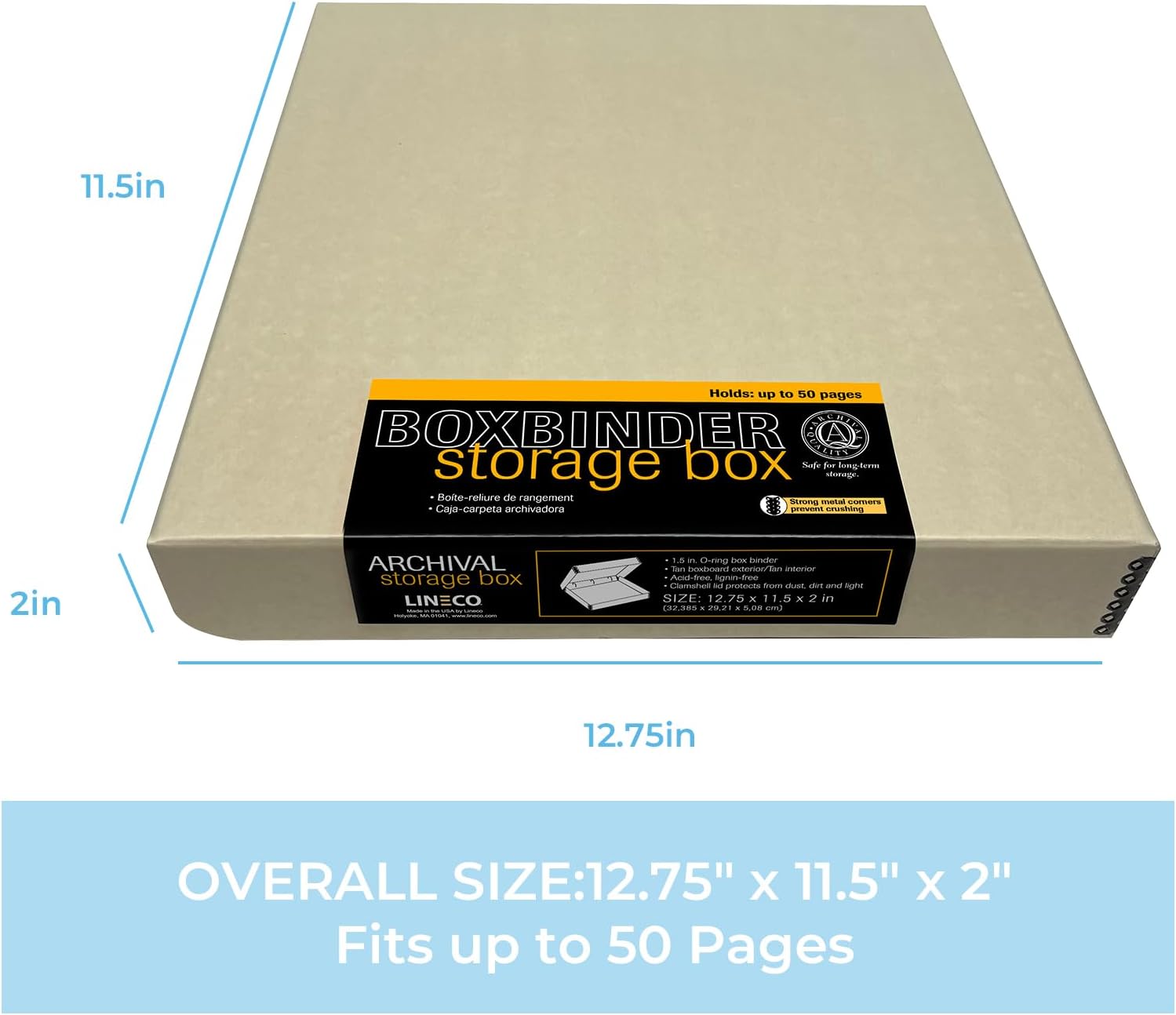
| EDITOR'S PICK[Lineco Archival Oversized 3-Rin…](https://www.amazon.com/dp/B00009R8W6?tag=greenflower20-20) | Mid-tier[Pioneer Sewn Bonded Leather Boo…](https://www.amazon.com/dp/B001AU845W?tag=greenflower20-20) | Budget pick[Pioneer Photo Albums STC-504 Na…](https://www.amazon.com/dp/B001VGH44C?tag=greenflower20-20) | |
|---|---|---|---|
| Capacity | 55 pages | 300 photos | 504 photos |
| Print size | — | 4×6" | 4×6" |
| Binding type | 3-ring | Sewn | — |
| Cover material | — | Leather | — |
| Dimensions | 13.25×11.75×2.5" | — | — |
| Color options | Black | Black | Navy Blue |
| Price | $33.99 | $19.99 | $11.99 |
| See on Amazon → | See on Amazon → | See on Amazon → |
Why “Archival” Is a Marketing Word (and How to Find the Real Thing)
Walk into any craft store and you’ll see “archival” on roughly 60 percent of the album products on the shelf. That word has no legal definition in a retail context. What does have a definition — and is your actual filter — is the PAT, or Photographic Activity Test. The PAT is an ISO standard (ISO 18916) developed by the Image Permanence Institute at Rochester Institute of Technology. It specifically tests whether a material will cause fading or staining when it comes in direct contact with a photographic image over time. A product that has passed the PAT can claim real archival credentials. One that simply says “acid-free” has cleared a much lower bar: it just means the pH is above 7.0 at the time of manufacture, which says nothing about what happens five years from now as the material ages.
The Library of Congress Preservation Directorate’s guidance on care and handling of photographs makes this distinction explicit: acid-free is a starting point, not an endpoint. The LOC’s care documentation recommends PAT-passed enclosures for any photographic material you intend to preserve beyond a single generation.
For restored prints specifically — whether inkjet output on cotton rag stock or darkroom-style silver gelatin prints — the stakes of getting this wrong are higher than they are for a vintage original. A vintage original degraded slowly over sixty years. A modern inkjet print exposed to off-gassing PVC sleeves can show surface blooming or color shift within three to five years, per the Northeast Document Conservation Center’s preservation leaflets on photographs. You’ve already restored it once. You don’t want to restore it again.
The practical filter: Before purchasing any album, page protector, or interleaving tissue, look for explicit PAT certification on the product listing or manufacturer’s specification sheet. Gaylord Archival and University Products (marketed under the Archival Methods brand) publish PAT pass documentation for their enclosure lines. If you can’t find that documentation, that material is not making contact with your prints.
The Three Material Decisions That Actually Drive Longevity
Once you’re filtering for PAT compliance, the field narrows fast. Within it, you’re really making three choices, each with a distinct tradeoff.
1. Page Material: Polypropylene vs. Polyester vs. Paper
Polypropylene (often sold as “poly pages”) is the most common archival-grade plastic you’ll encounter. It’s chemically inert, passes the PAT, and costs less than polyester. The tradeoff: polypropylene has a slightly softer surface that can scratch over time if prints are slid in and out repeatedly. For a display album that visitors will page through, this matters.
Polyester (Melinex or Mylar are the brand names most cited in archival contexts) is the premium option. The Society of American Archivists’ glossary defines polyester film as one of the most chemically stable enclosure materials available, with no known plasticizers and exceptional clarity. Manufacturers like Gaylord and Archival Methods offer polyester L-sleeves and four-flap enclosures. The cost premium is real — polyester sleeves run roughly 2–4× the price of polypropylene equivalents — but for a display album where prints will be handled repeatedly, reviewers and archivists consistently favor polyester for its resistance to scratching and static.
Buffered paper interleaving is the third option, typically used not as a sleeve but as a separator sheet between prints in a box or clamshell. Buffered means the paper has an alkaline reserve (usually calcium carbonate) that neutralizes acids before they can reach the print surface. The LOC recommends buffered interleaving for most photographic prints stored in boxes, with one exception: cyanotypes and certain dye-transfer prints actually react adversely to alkaline buffering. For restored inkjet and silver gelatin output, buffered tissue is generally safe.
Decision rule: If the album will be displayed and handled (passed around at family reunions, shown to clients), use polyester sleeves. If the album is primarily archival storage with occasional access, polypropylene pages at a fraction of the cost are defensible. Never use PVC pages — they will off-gas and destroy your prints.
2. Album Structure: Flush-Mount vs. Slip-In vs. Post-Bound
Flush-mount albums (also called lay-flat or matted albums) adhere prints directly to album pages, typically using a pressure-sensitive adhesive layer covered by a clear overlay. These are the albums fine-art photographers use for client delivery — they display beautifully, open flat, and feel premium. The archival concern is the adhesive: most consumer flush-mount albums use adhesives that have not been PAT-tested and will yellow and become brittle. Professional album manufacturers like Graphistudio, Leather Craftsmen, and Renaissance Albums publish materials documentation; ask for it before specifying a flush-mount album for archival use. A flush-mount album from a reputable professional lab with documented archival adhesive is a legitimate choice for display. A flush-mount from a mass-market retailer is not.
Slip-in albums use individual pockets — the print slides in without adhesive contact. Combined with PAT-passed polyester or polypropylene pockets, this is the safest display option because the print can be removed and re-housed without damage. The tradeoff is aesthetic: slip-in pages show the pocket edges and have a more utilitarian look that some clients or family members find less “finished.”
Post-bound albums use metal posts running through the spine, allowing pages to be added or removed. This is the standard format for professional photo albums and archival binders. The key variable is whether the page material (typically a paper page with a mounted print) is acid-free and buffered. Post-bound albums from archival suppliers like Pina Zangaro, which reviewers in professional photography communities consistently cite for quality construction and materials documentation, use materials that meet preservation standards.
Decision rule: For client deliverables or display gifts — flush-mount from a documented professional lab. For family archive albums that will be accessed over decades and possibly re-housed — slip-in or post-bound with PAT-passed enclosures. Never mix categories.
3. Storage Environment: The Variable Albums Can’t Fix
An album is not a climate-controlled vault. The Image Permanence Institute’s Storage Guide for Color Photographic Materials specifies target conditions of 65–70°F and 30–40% relative humidity for color photographic prints. At higher humidity, mold becomes a risk; at lower humidity, paper and print supports become brittle. These conditions matter more than the album brand.
By the numbers:
- 65–70°F / 30–40% RH: target range for color print storage (IPI)
-
75% RH: mold risk threshold for paper-based materials
- <25% RH: brittleness and delamination risk for inkjet prints
- Each 10°F reduction in storage temperature approximately doubles the life expectancy of color dye materials (IPI)
Practically: don’t store your best archival albums in an attic or basement, regardless of album quality. A climate-stable interior closet on an interior wall beats a beautiful album stored in a garage.
Matching Album Choice to Print Type
Restored prints are not all the same material, and this matters for enclosure selection.
Inkjet prints on cotton rag or baryta paper are the most common fine-art output for restored work. These use pigment or dye inks on cotton or alpha-cellulose paper. Pigment inks (the standard for Epson and Canon professional printers) have excellent projected longevity — manufacturer ratings of 100–200+ years under controlled conditions — but dye inks (common on less expensive printers) are significantly more vulnerable to UV and humidity. For dye-ink output, UV-filtering page materials, where available, provide additional protection. For pigment on cotton rag, standard PAT-passed polyester or polypropylene is sufficient.
Silver gelatin prints (darkroom prints, sometimes used by boutique restoration services) have a gelatin surface layer that is especially sensitive to fingerprints and humidity fluctuations. Polyester sleeves are strongly preferred over polypropylene for silver gelatin, because polyester’s lower static charge reduces the risk of the sleeve adhering to the gelatin layer.
Chromogenic prints (C-prints, the standard lab print for most of the twentieth century) are what many clients bring to restoration services as the original source material. If you’re re-housing original chromogenic prints alongside restored output, the Northeast Document Conservation Center’s preservation leaflets note that chromogenic materials are particularly sensitive to high humidity and benefit from cold storage for long-term preservation — not something a display album can provide.
The Decision Framework
Here’s where the intermediate practitioner often stalls: you understand the materials, but you have a specific deliverable in front of you and need a rule. Here it is.
If the album is a client deliverable meant for display and handling: Specify a professional flush-mount album from a lab that will provide materials documentation (Graphistudio, Renaissance, or equivalent). Confirm the adhesive system is documented as archival. Budget $150–$400 for a 20–40 page album at professional lab pricing as of mid-2026.
If the album is a family archive meant to last a generation or more: Use a post-bound or three-ring binder format with PAT-passed polyester L-sleeves from Gaylord Archival or Archival Methods. Store in a climate-stable location. Budget $40–$120 for binder and sleeves, which is the correct spend for this use case.
If the prints are silver gelatin or the client is a museum or institutional archive: Default to polyester four-flap enclosures in an acid-free clamshell box. This is the LOC and SAA’s recommended approach for institution-grade storage. Albums are a display format, not a preservation format — make that distinction explicit with institutional clients.
If you’re unsure about a specific product’s PAT status: Contact the manufacturer directly and ask for ISO 18916 test documentation. A legitimate archival supplier will have it. If they can’t produce it, that product is not making contact with your restored prints.
The work you put into restoration deserves a housing decision made with the same rigor. Materials fail silently — you won’t see the damage until it’s years in. Getting the enclosure right now is the last step of the restoration, not an afterthought.