May 5, 2026 • Doug Porter • 10 min reading time • Prices verified June 25, 2026
Building a High-Capacity Negative Archive: Sleeves, Binders, and Boxes That Scale
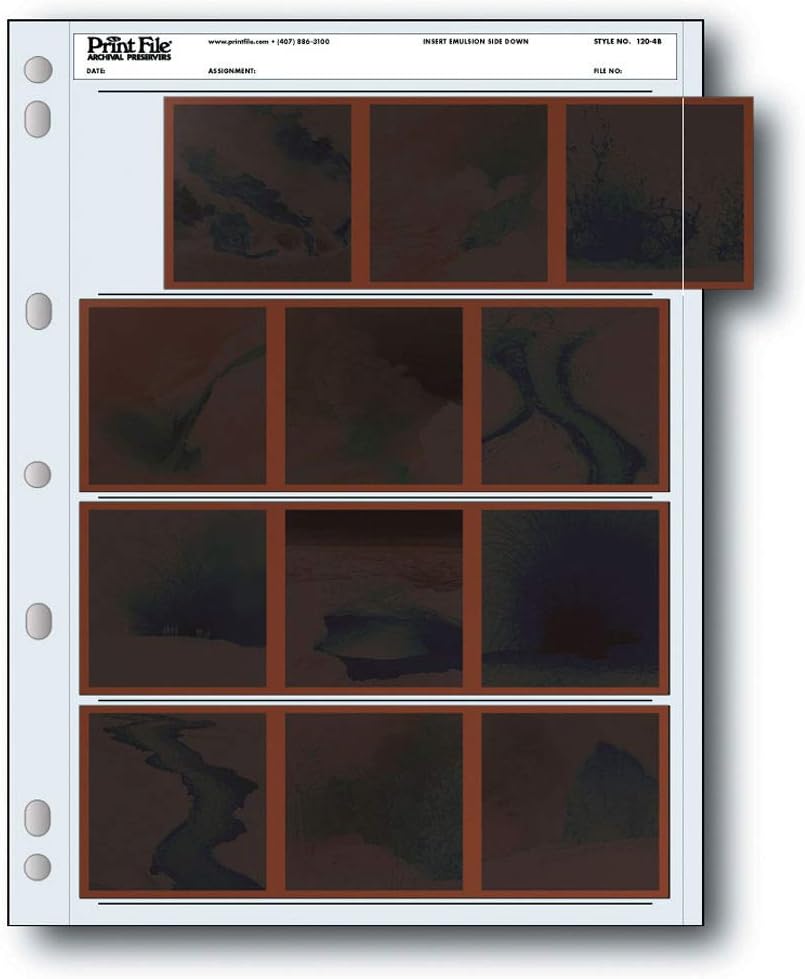
That shoebox in the closet — the one stuffed with lab envelopes, loose strips of 35mm film, and a few uncut rolls of 120 medium format — is not just a storage problem. It’s your photographic history waiting to become a retrieval disaster. A negative is the original film frame exposed in the camera: the physical object that carries your image information, long before any scan or print exists. Archival storage means housing that object in materials that won’t chemically attack it over time — no off-gassing acids, no plasticizers that cause the film to stick and degrade. If you’re at the stage where you’ve already started scanning and realized you need a physical system to match, this guide is your decision framework. We’ll cover the three layers of a scalable archive — sleeves, binders, and boxes — name the tradeoffs, show the math, and give you clear if-then rules so you can close this tab with a purchase list.
| EDITOR'S PICK[eTone Archival Storage Sheets 1…](https://www.amazon.com/dp/B0BMWQ13H1?tag=greenflower20-20) | Mid-tier[Acid Free Archival Film Bag Alb…](https://www.amazon.com/dp/B086LDJ8BK?tag=greenflower20-20) | Budget pick[Print File Archival 35mm Size N…](https://www.amazon.com/dp/B00BQQOEKY?tag=greenflower20-20) | |
|---|---|---|---|
| Sheets included | 50×135 pages | — | 25 pages |
| Binder included | ✓ | — | ✗ |
| Format support | 35mm only | 35mm/120/4×5/8×10 | 35mm only |
| Material | — | Acid-free | Archival |
| Capacity (frames) | — | — | 28 (7 strips × 4) |
| Price | $29.99 | $20.99 | $11.70 |
| See on Amazon → | See on Amazon → | See on Amazon → |
The Three-Layer System (And Why Each Layer Matters)
A real negative archive is not one product — it’s three nested layers working together:
- Sleeves (also called “print file pages” or “negative pages”) — the transparent polypropylene or polyester pockets that hold individual strips of film.
- Binders — the ring binders or post-bound albums that hold the pages in order.
- Boxes — the archival clamshell or document boxes that house binders and provide the final environmental barrier.
Most people starting out buy sleeves and forget the binder, or buy a binder and store it loose on a shelf where it gets dusty and damaged. The system only works when all three layers are present.
What “Archival” Actually Means
The word “archival” is used loosely in product marketing, so here’s the plain-English standard: a material is genuinely archival if it is acid-free (pH 7 or above), lignin-free (no wood-pulp compounds that yellow and off-gas), and made from an inert plastic — ideally uncoated polypropylene, polyethylene, or polyester (Mylar). The Society of American Archivists, in its published terminology guide titled “Archival and Archival-Quality Materials,” distinguishes between “archival” as a general term and “archival-quality” as a performance claim that should be backed by a manufacturer spec sheet. When a product is described as archival by reviewers or sellers, treat that as a starting point and verify against the manufacturer’s published material safety data or product spec before committing to long-term storage. This is especially important for third-party or import sleeves.
Sleeves: Where the Format Decision Lives
The 4-Wide vs. 6-Wide Question
For 35mm film, sleeves come in two common strip configurations:
- 4-wide: each row holds a strip of 4 frames. A standard page holds 6 rows = 24 frames (one roll).
- 6-wide: each row holds a strip of 6 frames (or 5 frames with a leader stub). A standard page can hold 36 frames (one roll) in fewer rows with different cutting points.
The practical difference is not just capacity — it’s cut quality. Photographers who have compared both formats consistently note that 6-wide sleeves can offer better cut-edge alignment for strips running the full frame count of a roll. The concern with some 4-wide products is that the bottom-row pockets can be dimensioned too shallow, leaving the final strip partially exposed to air and handling. If you’ve ever had a strip fall halfway out of a sleeve during binder handling, you’ve felt this problem.
The tradeoff: 6-wide pages require cutting your film into 6-frame strips, which is non-standard — most labs return film in 4- or 5-frame strips. If you’re archiving film that was processed commercially and returned pre-cut, 4-wide or 5-wide sleeves preserve the original strip length without requiring recuts.
Print File: The Default Starting Point
Across aggregated owner reviews and community discussions among film photographers, Print File sleeves are consistently described as the industry standard for polypropylene archival sleeves. The specific reasons cited: consistent pocket depth, reliable seam bonding so pockets don’t delaminate under the weight of a full binder, and wide availability in bulk quantities for 35mm, 120 medium format, and 4×5 large format sizes.
Are they perfect? No. Some owners report that the polypropylene can develop a slight static charge that attracts fine dust over years of handling. Polyester (Mylar) sleeves from companies like Secol or Clearfile are considered superior for long-term stability by institutions following preservation guidelines published by the Library of Congress Preservation Directorate in their guidance document “Caring for Your Photographs” — but they cost roughly 3–5x more per page and are harder to source in bulk quantities that make sense for a home or boutique studio archive.
If-then rule: If your archive is personal or studio-scale (under 5,000 rolls), Print File polypropylene is the practical default. If you’re building an institutional or museum-grade archive, or archiving irreplaceable originals (a single photographer’s life work, estate collection), budget for polyester sleeves and verify supplier compliance with the standards published by the Image Permanence Institute at Rochester Institute of Technology in their guide “A Consumer Guide for the Selection and Use of Polypropylene-Based Storage Materials.”
eTone and Other Import Sleeves
eTone sleeves are manufactured for the photography market and are frequently described by buyers as acid-free and archival. Owners who have compared them directly to Print File report that cut quality on eTone 6-wide pages is notably clean — the specific edge that triggered format-switching in several documented buyer comparisons. However, “acid-free” as claimed by import manufacturers should be verified against the actual spec sheet, not just the product listing. Henry Wilhelm’s foundational research, published in “The Permanence and Care of Color Photographs” by Wilhelm Imaging Research, emphasizes that pH-neutral claims without PAT (Photographic Activity Test) certification should be treated as preliminary. For most working archives, eTone’s price-to-quality ratio earns a place in the system — just don’t use it for the one box of irreplaceable original camera negatives without doing the spec verification.
Binders: The Backbone of the System
Will Any Three-Ring Binder Work?
Technically, any D-ring or O-ring binder accepts standard Print File pages (which are punched with standard three-hole spacing). Practically, a standard office binder from a big-box store introduces two risks:
- Chemical off-gassing: standard vinyl binders often contain PVC (polyvinyl chloride), which off-gasses plasticizers that can transfer to film surfaces over years of contact. The Library of Congress Preservation Directorate, in “Caring for Your Photographs,” specifically flags PVC as a material to avoid in photographic storage environments.
- Structural failure under load: a full binder of 35mm sleeves — say, 50 pages × 24 frames — is heavier than it looks. Cheap ring mechanisms fail under repeated use, and a binder that drops or snaps open while full can damage film strips.
Dedicated archival binders use polypropylene or board-and-cloth construction, inert hardware, and are spec’d for film weight. Purpose-built archival binders in this category are widely noted by multi-format shooters for accommodating both 35mm Print File pages and 120 format pages interchangeably — which matters if you shoot multiple formats and want one unified binder style across your whole archive rather than separate incompatible systems.
By the numbers:
| Format | Frames per Print File page | Pages per standard 2” binder | Rolls per binder (approx.) |
|---|---|---|---|
| 35mm (4-wide, 6-row) | 24 | ~40–50 | ~40–50 rolls |
| 120 medium format (3-frame) | 12 | ~30–40 | ~60–80 rolls (2 pages per roll) |
| 4×5 large format (2-per-page) | 2 | ~40 | 80 sheets |
These figures reflect typical owner-reported capacity; actual fit depends on binder ring diameter and page thickness.
Boxes and the Final Environmental Layer
Binders stored on open shelves are exposed to light (which accelerates dye fading in color negatives), humidity fluctuations, and particulate dust. Archival clamshell boxes or document boxes close this loop.
For a working studio or serious home archive, drop-front clamshell boxes in acid-free board are the standard. They stack cleanly, label on the spine, and provide a dark, low-humidity microenvironment when combined with silica gel packets (replaced annually). The Library of Congress Preservation Directorate, in “Caring for Your Photographs,” recommends storing color negatives at 65°F or below and relative humidity between 30–50% for extended longevity — conditions that a sealed archival box in a climate-controlled room can approximate reasonably well.
For high-volume archives (50+ binders), metal lateral filing cabinets with archival hanging folders are a practical alternative used by professional photo labs and small museum digitization teams. They’re more expensive upfront but cheaper per-binder-slot at scale and provide better environmental control than stacked boxes.
Indexing: The System Inside the System
The physical archive is only as useful as your ability to find a specific roll. After assembling the physical system, the natural next step — one almost every organized shooter eventually takes — is building a searchable catalog. It’s worth constructing from day one rather than retrofitting later.
A minimum viable indexing entry for each binder or page:
- Roll ID: sequential number (R-0001, R-0002…)
- Date shot (or date received, for inherited archives)
- Subject / event / location
- Film stock (matters for scanning profiles — Kodachrome cyan shift and Ektachrome magenta cast behave differently and need to be flagged)
- Scan status: not scanned / scanned at what resolution / master file location
Even a plain spreadsheet with these five fields makes the difference between an archive you can actually use and a museum you never open. Tools like Google Sheets or Airtable both work well; the format matters less than the discipline of filling it in at filing time.
Frequently Asked Questions
Can I mix 35mm and 120 format sleeves in the same archival binder? Yes — purpose-built archival binders accept both 35mm and 120 format Print File pages, since both use standard three-hole punching. You can organize them in the same binder by format section, though many multi-format shooters prefer separate binders per format for cleaner indexing.
Are eTone sleeves truly acid-free and archival-quality, or just described that way? eTone markets their sleeves as acid-free, and owner reviews report no visible chemical damage in medium-term use. However, “acid-free” as a marketing claim is not the same as PAT certification. Per the Image Permanence Institute’s guidance on polypropylene-based storage materials, independent testing is the only reliable verification. Treat eTone as a practical working-archive sleeve; for irreplaceable originals, verify the spec sheet or use certified Print File or polyester alternatives.
How many rolls of 35mm film fit in one binder with Print File pages? Approximately 40–50 rolls in a standard 2-inch D-ring binder using Print File 35mm 4-wide pages (24 frames per page, one page per 24-exposure roll). For 36-exposure rolls, you’ll need slightly more than one page per roll, which brings the per-binder roll count closer to 35–40.
What is the difference between 4-wide and 6-wide 35mm sleeve formats, and which is better? 4-wide sleeves hold strips of 4 frames; 6-wide hold strips of 6 frames. The 6-wide format can offer better cut-edge alignment for certain strip lengths. The practical choice depends on how your film is returned from the lab — if pre-cut in 4-frame strips, use 4-wide. If you’re cutting your own, 6-wide is worth considering for the pocket geometry.
Do I need a special archival binder, or will any three-ring binder work? Any binder accepts Print File pages, but standard vinyl office binders off-gas PVC plasticizers that can transfer to film over years. The Library of Congress Preservation Directorate explicitly flags PVC as a material incompatible with photographic storage. For long-term archival storage, use binders made from polypropylene or acid-free board.
How should I label and index my negative binders so I can find specific rolls later? Label binder spines with a date range and roll number range (e.g., “2018–2019 / R-0080–R-0140”). Inside, attach a printed index sheet to the front cover listing each roll’s ID, date, subject, film stock, and scan status. Mirror this in a spreadsheet so you can search by keyword rather than pulling binders off the shelf. Build the index as you file, not after.