September 19, 2026 • Doug Porter • 9 min reading time • Prices verified June 25, 2026
The Fireproof Photo Box Reality Check: What Buyers Actually Test, Trust, and Regret
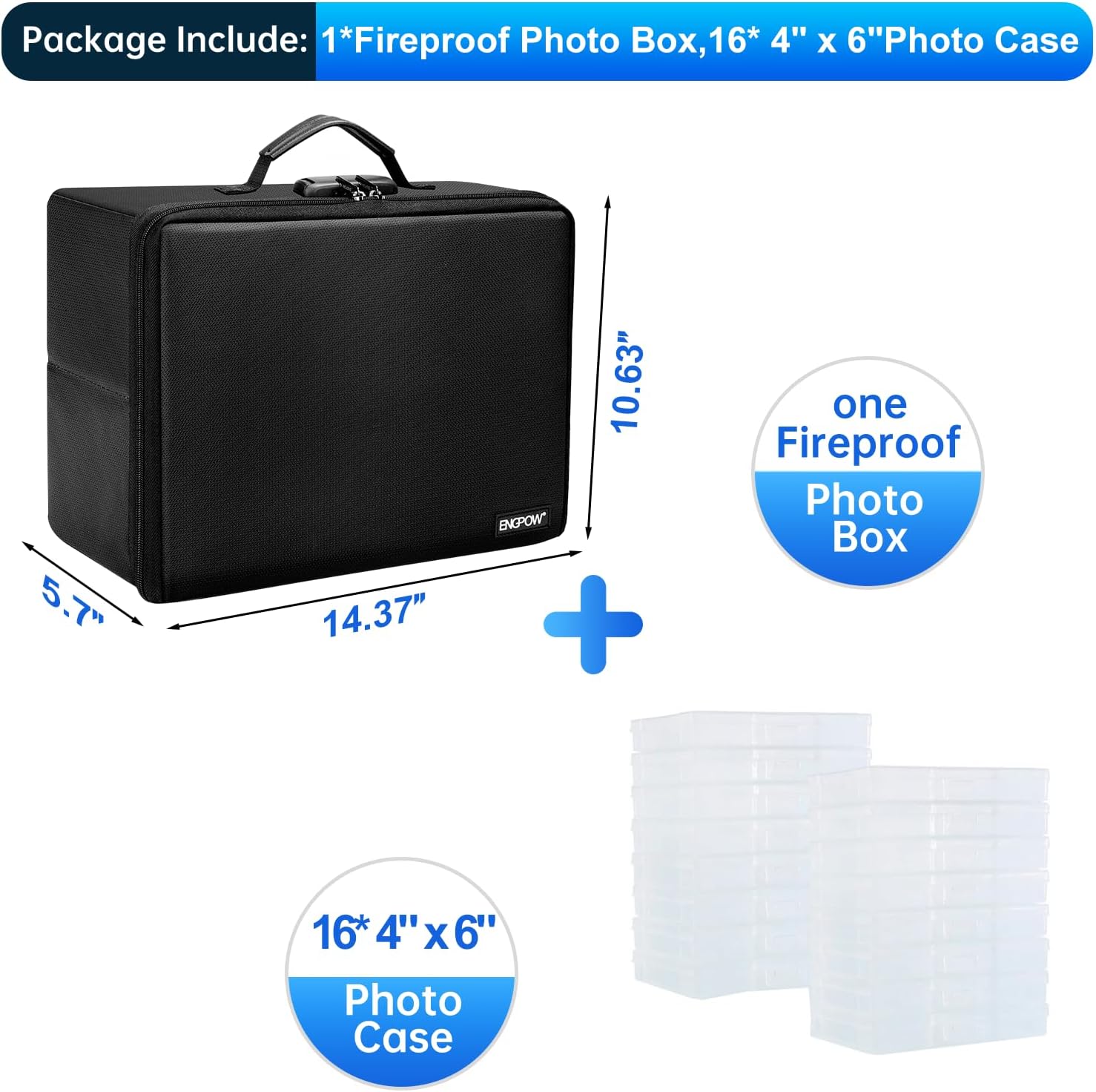
That shoebox stuffed with your parents’ wedding prints, your grandmother’s Kodachrome slides, your own childhood birthday photos — it holds things that cannot be replaced. Scanning helps, but not every family has gotten there yet, and not every original can be fully replicated by a digital file. So when you’re looking at a plastic box on a shelf labeled “fireproof,” it’s worth asking a very direct question: what does that label actually promise, and is the promise real? A fireproof photo storage box is a consumer product — usually a latching polypropylene or composite container — marketed to protect prints and documents from fire damage. An archival photo storage box is a completely different product designed to slow chemical degradation over decades through acid-free, lignin-free materials. These two categories solve different problems. Conflating them is one of the most common and costly mistakes buyers make in photo preservation — and this article is the cheat sheet that keeps you from making it.
What “Fireproof” Actually Means on a Consumer Box Label
Here’s the uncomfortable truth that manufacturers are not going to put on the front of the packaging: most consumer-grade fireproof photo boxes carry no independent fire-resistance rating.
A genuine fire-rated safe or document chest earns a certification from Underwriters Laboratories under their UL 72 Standard for Tests for Fire Resistance of Record Protection Equipment. That test exposes the container to a specific temperature curve for a specific duration and verifies that interior temperatures stay below the threshold at which paper chars (approximately 177°C / 351°F) or film melts. Per UL’s published standards, a “Class 350” one-hour rating means the interior stayed below 350°F for one full hour in a standardized fire simulation.
Consumer plastic fireproof photo boxes — the brightly colored latching containers you see in the $30–$80 range — generally carry no such independent certification. Across aggregated buyer reviews for products like the ENGPOW fireproof box and the 18-slot fireproof photo case, a consistent pattern emerges: no reviewer actually tested fire resistance. The comfort buyers feel is derived from the label, the perceived sturdiness of the container, and the peace of mind of having done something. That’s not nothing — but it’s also not a UL 72 rating.
The Society of American Archivists’ preservation resources make this distinction clearly: rated fire protection equipment is tested against defined standards; consumer “fireproof” labeling is a marketing claim that may or may not reflect any formal test protocol.
By the numbers:
- UL 72 Class 350-1HR: interior must stay below 350°F for 60 minutes at an external fire reaching ~1700°F
- Typical house fire peak temperature: 1,100–1,200°F (590–650°C) at ceiling level
- Most consumer plastic “fireproof” boxes: no published UL 72 classification on the product listing
- Photographic prints begin to char: ~177°C / 351°F; color film begins distortion below 150°C
The Emergency-Grab Problem These Boxes Actually Solve
Here’s where I want to be fair to the product category, because dismissing it entirely would be dishonest.
Consumer fireproof photo boxes are genuinely well-suited for one specific threat scenario: the fast-evacuation emergency where you have 60–90 seconds to grab one container and get out. Buyers across both the ENGPOW and the 18-case photo box consistently describe their purchase in terms that have almost nothing to do with verified fire ratings. The phrase “easy to grab in an emergency” appears repeatedly and organically — it’s the real value proposition. These buyers are solving a grab-and-go problem, not a survive-a-three-alarm-fire problem.
That’s a meaningful distinction. A well-organized, clearly labeled fireproof-labeled box sitting near your door keeps your most important physical prints consolidated, identifiable, and portable. If you have to leave fast — fire, flood warning, gas leak, any emergency — one box beats twenty scattered albums every time.
The tradeoff is honest: if the box doesn’t make it out with you and the fire is serious, the protection offered by an uncertified plastic container is uncertain at best. Buyers who understand this are making a reasonable choice. Buyers who assume the label means UL-rated fire protection may be surprised.
One friction point worth flagging: lock mechanism stiffness is a first-use complaint that appears consistently across both products in aggregated reviews. The latches on these boxes frequently require more force than buyers expect, which can be frustrating when you’re trying to get a quick look at contents during non-emergency use. It’s worth cycling the mechanism a few times before you need it to work under stress.
What Archival Boxes Actually Protect Against
The Lineco photo card box tells a completely different story — and the buyers who choose it have almost nothing in common with the emergency-prep buyer.
Across owner accounts for the Lineco archival photo box, one pattern stands out: buyers are consolidating. One owner description captures it precisely — taking 8 to 10 photo albums’ worth of material and reducing it to a single properly housed collection. The motivation isn’t disaster preparedness. It’s chemical permanence over decades.
Here’s the science in plain English. Standard cardboard, most plastic sleeves, and acidic paper all off-gas compounds — particularly acetic acid and hydrogen peroxide — that accelerate the fading, yellowing, and brittleness of photographic prints and film. This process happens at normal room temperature and humidity. It’s slow, invisible, and irreversible. The Library of Congress’s family archives guidance and the Image Permanence Institute’s storage environment guidelines both identify improper housing materials as a primary cause of long-term print deterioration, ahead of light exposure in many indoor storage scenarios.
Archival boxes like Lineco’s are constructed from acid-free, lignin-free materials — meaning the box itself doesn’t participate in the chemical degradation of your photos. Per Lineco’s published product specifications and University Products’ archival materials catalog, the materials meet PAT (Photographic Activity Test) standards, which is the recognized benchmark for materials in contact with photographic media.
What archival boxes do not offer: thermal protection, water resistance, or emergency portability in any meaningful sense. An archival box in a basement during a house fire is a loss. An archival box in stable, climate-appropriate indoor storage over 50 years is the right tool for the job.
The Decision Framework: Which Problem Are You Actually Solving?
If you’ve been reading this as someone with a current acquisition, consolidation project, or preservation decision pending — here’s the direct version.
Your actual threat model should drive your choice:
| Threat | Right Tool | Wrong Tool |
|---|---|---|
| Fast evacuation emergency | Consumer fireproof/grab box | Archival box |
| Slow chemical degradation over decades | Archival acid-free box | Consumer fireproof box |
| House fire survival (rated) | UL-72 certified fire safe | Consumer plastic “fireproof” box |
| Space consolidation from albums | Archival box | Either fireproof option |
| Original negatives & slides | Archival box (PAT-compliant) | Consumer fireproof box |
The honest “if X then Y” rule set:
- If you want to grab one thing on the way out the door: the consumer fireproof box solves your actual problem. Go in with clear eyes about what the label does and doesn’t certify, and organize accordingly.
- If you want your prints to survive 30–50 years in stable storage: archival materials are non-negotiable. The Lineco box is the right category.
- If you want both: use both. House your prints in archival sleeves inside an archival box for long-term storage, and keep a curated set of the most irreplaceable duplicates (or high-resolution scans on archival media) in the emergency grab box. These products solve different problems and there is no reason they have to compete.
- If you want actual fire-rated protection and your budget allows: look at a rated UL 72 Class 350 document safe — not a consumer photo box. The price difference is significant (entry-level rated safes start around $150–$250 and rise steeply), but the protection claim is verified.
Frequently Asked Questions
Are consumer fireproof photo boxes actually rated to survive a house fire?
Almost certainly not, in the sense that matters. Most consumer plastic fireproof photo boxes carry no UL 72 fire-resistance classification. The “fireproof” label reflects a marketing claim, not an independent test result. A genuine house fire at ceiling level reaches temperatures far above what an uncertified plastic container is designed to manage. If fire protection is your primary goal, look for UL 72 Class 350 certification on any container you’re evaluating.
What temperature rating should I look for in a fireproof photo storage box?
For photographic materials, the critical threshold is keeping interior temperatures below approximately 150°C (302°F) — color film and resin-coated prints can sustain damage below the charring point for paper. A proper UL 72 Class 350 rating (350°F interior maximum) covers paper; for film and photos, a lower interior temperature is ideal. Many consumer boxes publish no interior temperature rating at all, which should inform your expectations.
Can I store original negatives and slides in a fireproof photo box safely?
Not as your primary long-term storage solution. Negatives and slides — particularly older Kodachrome and Ektachrome stocks — are sensitive to off-gassing from non-archival materials, temperature fluctuations, and humidity. A consumer fireproof box is not designed to maintain stable humidity or PAT-compliant interior chemistry. For originals, archival polypropylene sleeves inside an acid-free, PAT-compliant box is the correct housing. An emergency grab box can hold copies of your most critical scans on archival media; the originals belong in proper archival storage.
Is the lock on these boxes strong enough to prevent accidental opening?
Accidental opening, yes — the latching mechanisms on both the ENGPOW-style and 18-case fireproof boxes are firm enough that they won’t pop open in transit. However, as aggregated buyer reviews consistently flag, the stiffness that prevents accidental opening also makes intentional opening more friction-prone than buyers expect, especially on first use. This is a real UX complaint, not a minor quibble. Cycle the mechanism several times when you first receive the box so you know exactly what force it requires before you’re under time pressure.
How is a fireproof photo box different from an archival photo storage box?
The design intent is entirely different. A consumer fireproof box is built for thermal resistance (with varying levels of actual effectiveness) and portability — it’s an emergency-preparedness product. An archival box is built from chemically inert, acid-free, lignin-free materials specifically to prevent the slow chemical deterioration that destroys photographic media over decades. One protects against acute disaster; the other protects against slow entropy. Neither product does the other’s job.
Should I use both a fireproof box and an archival box for the same photos?
Yes, and this is the recommendation that comes out of taking both threat models seriously. Store originals — prints, negatives, slides — in proper archival housing for long-term chemical stability. Separately, keep a curated emergency grab box with your most irreplaceable items (or high-quality scans on archival optical media) organized and accessible. The two boxes address two different failure modes, and for truly irreplaceable materials, addressing both is the correct call.