June 8, 2026 • Doug Porter • 8 min reading time • Prices verified June 25, 2026
Museum-Grade or Good Enough? Archival Print Storage Boxes for Every Collection Size
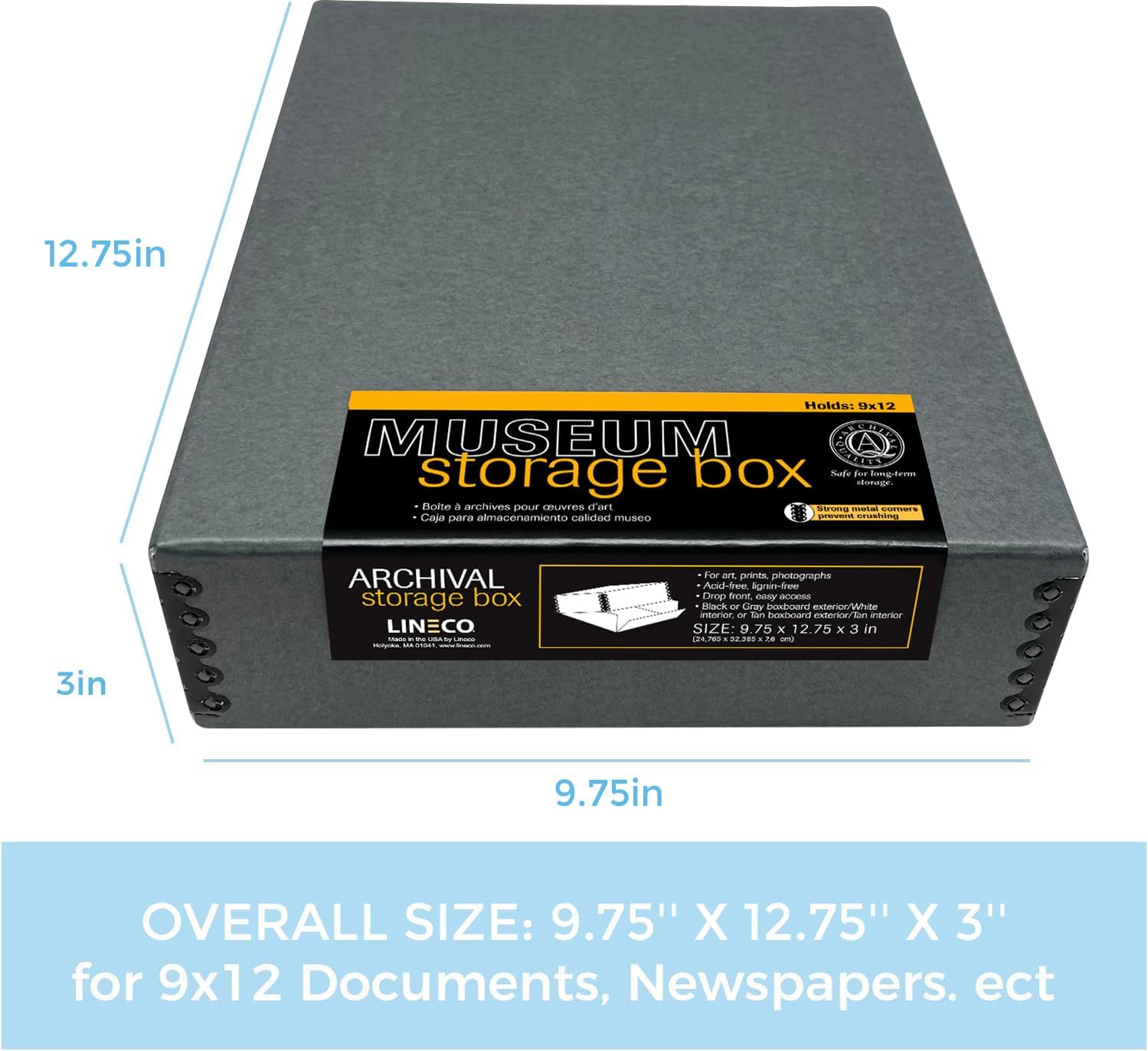
That box of old photographs is not just paper and chemistry — it is every birthday party, every face you recognize, every moment your family bothered to freeze in time. The tragedy is that photographs destroy themselves slowly and silently. Acids in cheap cardboard boxes off-gas onto print surfaces, humidity swings cause emulsions to crack, and within twenty or thirty years a “fine” storage solution leaves prints yellowed, stuck together, or faded beyond recognition. Archival storage boxes — meaning boxes manufactured to block acid migration, buffer against humidity swings, and protect against light — are the single lowest-cost, highest-leverage intervention most collectors and archivists can make. This guide walks you through what the standards actually require, where the real cost-versus-protection tradeoffs live, and which box tier makes sense for your collection size and budget. By the end you will have a clear decision rule, not just a product list.
What “Archival” Actually Means (and What It Doesn’t)
The word “archival” on packaging is not a regulated claim. Any manufacturer can print it. What you are actually looking for is a specific cluster of material standards developed by conservation scientists over decades — and understanding those standards is the only way to shop with confidence.
pH neutral or alkaline buffered. Paper naturally contains acids that accelerate deterioration. Archival boxes use materials with a pH of 7.0 or above (neutral) or, better, 8.0–9.5 (alkaline buffered), which means calcium carbonate or magnesium carbonate has been added to neutralize acid migration over time. The Library of Congress Preservation Directorate, in its guidance document “Caring for Your Photographs,” specifically recommends alkaline-buffered enclosures for most photographic print types.
PAT-passing. The Photographic Activity Test (PAT), developed by the Image Permanence Institute at Rochester Institute of Technology, is the gold standard for verifying that a storage material will not chemically react with photographic images over time. A box that passes PAT is not just made from neutral paper — it has been tested against actual photographic emulsions. The IPI’s “Media Storage Quick Reference” (2023 edition) identifies PAT compliance as the minimum threshold for any enclosure holding photographic materials intended for long-term preservation.
Buffered versus unbuffered — one non-obvious trap. Alkaline buffering is excellent for fiber-based black-and-white prints and most color negatives. But for chromogenic color prints (the standard C-print from a minilab or inkjet output on RC paper) and especially for albumen or cyanotype prints, the alkaline buffer can actually accelerate dye fading. Wilhelm Imaging Research’s foundational work on color photograph permanence documents this reaction in detail. The practical takeaway: for contemporary color print collections, specify pH-neutral but unbuffered boxes, not alkaline-buffered ones. For B&W silver-gelatin prints, alkaline buffering is your friend. For mixed collections, neutral-pH PAT-passing is the safe middle path.
Acid-free is not the same as archival. Acid-free means the box started at neutral pH; it does not mean it will stay there, and it says nothing about lignin content. Lignin is a wood pulp component that oxidizes over time and becomes acidic. Look for “lignin-free” on the spec sheet alongside “acid-free.”
The Box Taxonomy: Four Tiers Worth Knowing
Not all collections need museum conservation standards. Here is a practical framework organized by use case, not by price alone.
Tier 1 — Drop-in Protection ($0.50–$2 per box)
Acid-free clamshell or drop-front boxes made from lignin-free corrugated board or gray board. These meet basic preservation requirements and are appropriate for prints you will access infrequently but want better than a shoebox. They do not carry PAT certification in most cases. Suppliers like Gaylord Archival (whose product specification documentation is publicly available) offer these as entry-level options clearly labeled as “acid-free” rather than PAT-passing.
Best for: Family snapshot collections, estate clearance staging, genealogy projects where digitization is the primary preservation strategy and physical archiving is secondary.
Tradeoff: Without PAT certification, you are accepting some chemical uncertainty. For irreplaceable prints, this tier is not sufficient.
Tier 2 — Serious Preservation ($2–$6 per box)
Clamshell or drop-front boxes manufactured from pH-neutral, lignin-free, PAT-passing board. These are the workhorses of small museum collections, independent archivists, and serious family historians. The Society of American Archivists, in its “Archival Materials: Preservation Basics” guidance, recommends exactly this specification for photographic print storage in institutional settings with standard climate control (65–70°F, 30–50% relative humidity).
At this tier, box construction quality matters: look for metal-free closures (no brass staples or steel clips that can corrode and stain), clean-cut edges without exposed raw board on the interior, and a snug but not tight fit that allows print interleaving without pressure distortion.
Best for: Fine-art print collections, silver-gelatin archives, boutique studio long-term client storage, small museum digitization projects.
Tradeoff: Cost scales linearly with volume. A collection of 500 prints properly housed at this tier will run $300–$600 in boxes alone before interleaving materials are factored in.
Tier 3 — Conservation Grade ($6–$20+ per box)
These are the boxes used by major institutional collections: clamshell or phase boxes constructed from museum board (typically 4-ply or 8-ply, pH 8.5+, PAT-certified), with archivally stitched or heat-sealed corners, cloth spine reinforcement, and sometimes custom-fitted interior supports. Brands like Hollinger Metal Edge and Gaylord’s conservation-grade lines publish full material data sheets including pH values, buffering agent concentrations, and PAT test reports.
At this tier you are also paying for dimensional precision. A box that fits a 16×20 print with 1–2mm of clearance on each side dramatically reduces the risk of corner abrasion during retrieval.
Best for: Fine-art photographers with edition prints or exhibition archives, institutional collections, any print where replacement is impossible and the materials are genuinely irreplaceable.
Tradeoff: The cost-per-unit math changes fast for large collections. A 200-print archive at this tier can easily reach $1,500–$4,000 in enclosure costs alone — before climate control infrastructure.
Tier 4 — Clamshell Presentation / Collector Grade ($20–$150+ per box)
Custom clamshell boxes clad in book cloth or Japanese tissue, often made to order. These serve dual functions: maximum conservation protection and display-quality presentation for fine-art editions, estate archives, or collector portfolios. They are archival in the strictest sense but also beautiful objects. Custom fabricators include Talas (bookbinding and conservation supplier) and various bespoke bookbinders who work to archival specifications.
Best for: Edition prints being sold or gifted with the physical package as part of the value proposition, institutional donations where presentation matters, heirloom family archive projects.
By the Numbers
| Tier | Typical PAT-certified? | pH range | Cost per box | Best fit |
|---|---|---|---|---|
| 1 — Acid-free basic | Rarely | 7.0–7.5 | $0.50–$2 | Casual family archive |
| 2 — Preservation grade | Usually | 7.5–8.5 | $2–$6 | Serious archivist, small museum |
| 3 — Conservation grade | Always | 8.0–9.5 | $6–$20 | Fine-art, institutional, irreplaceable |
| 4 — Clamshell custom | Always | 8.0–9.5 | $20–$150+ | Edition prints, bespoke presentation |
The Variables That Actually Drive Your Decision
Collection size versus access frequency. A 50-print fine-art archive that never moves warrants Tier 3. A 5,000-print genealogy collection that gets pulled and re-filed regularly might be better served by Tier 2 throughout — because handling damage from frequent access often outpaces the slower chemistry of a slightly lower-spec box.
Climate control reality. The Image Permanence Institute’s storage guidance is explicit: a PAT-passing Tier 3 box in an uncontrolled garage (summer humidity regularly above 65%, temperature swings of 40°F or more) will not perform as designed. Box specifications assume stable storage environments. If your storage space is not climate-controlled, investing in humidity and temperature stabilization delivers more preservation benefit per dollar than upgrading from Tier 2 to Tier 3 boxes.
The interleaving question. Boxes alone are necessary but not sufficient. Prints stored in direct contact will exchange acids and, in high humidity, can physically stick together. The standard interleaving materials — unbuffered archival tissue for color prints, alkaline-buffered tissue for B&W — add $0.05–$0.30 per sheet depending on volume. Budget for this from the start.
Vertical versus horizontal storage. Drop-front boxes (which open from the front and store prints horizontally like a drawer) are preferred for frequent access — prints slide out without bending corners. Clamshell boxes (lid lifts off entirely) are better for long-term low-access storage where the goal is maximum protection and minimal handling. Neither is archivally superior; the choice is workflow-driven.
The Decision Rule
If your collection is under 200 prints and you have a stable indoor storage environment, Tier 2 PAT-certified boxes with appropriate interleaving is the correct answer for nearly every situation. The marginal protection from Tier 3 does not justify the cost unless individual prints have significant monetary or institutional value.
If you are managing 200+ prints of mixed importance, segment the collection: Tier 3 for the top 10–15% of irreplaceable or high-value prints, Tier 2 for the rest. This is exactly the approach recommended by the Society of American Archivists for small institutional collections operating under budget constraints.
If climate control is not in place, fix that before upgrading box tier. A hygrometer and a room-sized dehumidifier running in a dedicated storage room will do more for your prints than doubling your per-box spend.
If the prints are color (chromogenic or inkjet RC), confirm the box spec is neutral-pH but unbuffered, or at minimum verify PAT certification — because as Wilhelm Imaging Research’s long-form permanence research documents, the wrong buffer chemistry actively accelerates color dye fading rather than preventing it.
And if a print matters enough that you are reading a guide like this one to figure out how to store it — it probably matters enough for at least Tier 2. The delta between a $0.75 acid-free box and a $4.50 PAT-certified preservation box is real, measurable, and over a thirty-year horizon, almost certainly worth it.