July 5, 2026 • Doug Porter • 11 min reading time • Prices verified June 25, 2026
Building a Negative Archive That Scales: Sleeves, Binders, and the Brands That Hold Up Over Time
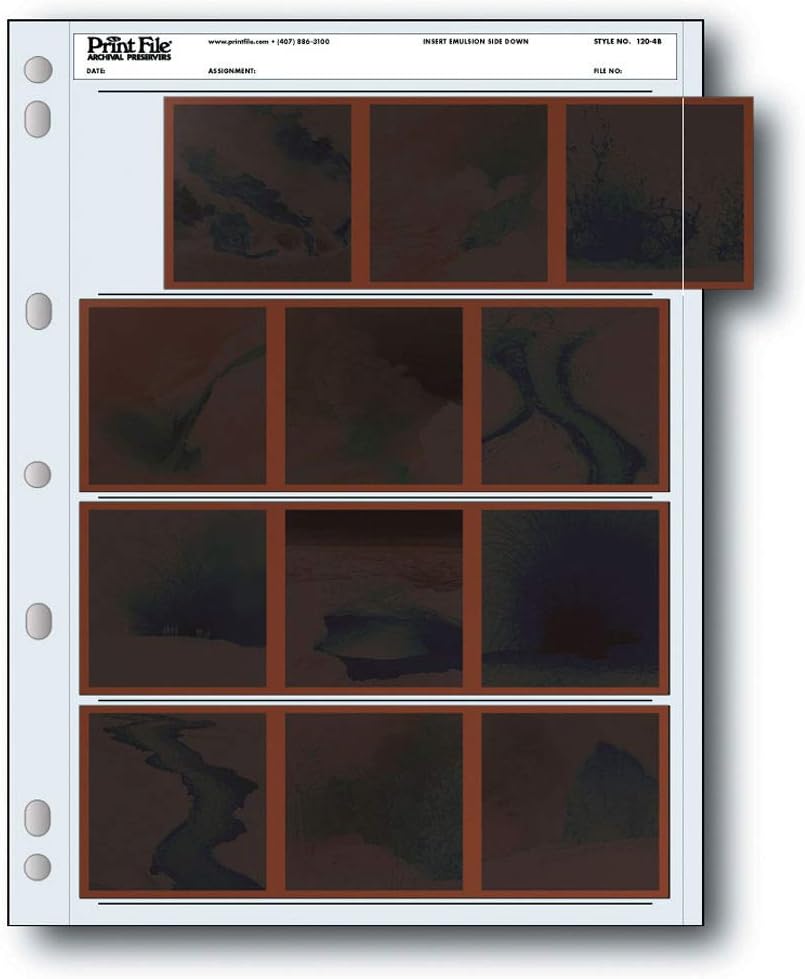
That box of film negatives — discovered in a parent’s closet, inherited from a grandparent’s estate, or simply accumulated across years of shooting — holds images that no cloud backup can recreate. But negatives are fragile in ways that prints aren’t: they scratch, they curl, they off-gas acids onto each other when stored badly, and a single bad sleeve can etch a latent image into the base over the course of a decade. Archival negative storage — the practice of housing film in chemically inert, acid-free sleeves and binders designed to last generations — is the unglamorous but essential foundation of any serious digitization or preservation workflow. This guide is for the person who has moved past the “just get them off the floor” stage and is now asking the more productive question: what system do I build so I can actually find frame 14 from roll 47 in three years?
If you’re at the beginning of that journey, the short version is: the sleeve material matters, the binder closure matters, and the labeling system matters more than either. The rest of this article shows you exactly why, names the brands that hold up, and gives you a decision framework you can apply to your specific collection size and budget.
Why “Archival” Isn’t Just a Marketing Word — and How to Tell the Difference
The term archival gets applied to everything from museum-grade polyester sleeves to grocery-store photo albums, so it’s worth grounding it in something concrete. For negative storage, archival quality has a specific technical meaning: the material must be chemically inert (it won’t react with the film emulsion), pass the Photographic Activity Test (PAT) — a standardized accelerated aging test developed by the Image Permanence Institute — and meet ANSI/ISO standards for long-term storage.
Per the Library of Congress Preservation Directorate’s guidance on care and handling of photographs, acceptable sleeve materials for film negatives are polyester (sold under trade names like Mylar D), polypropylene, and polyethylene. PVC — polyvinyl chloride — is the material to avoid absolutely; it off-gasses plasticizers that actively degrade film over time. Unfortunately, PVC sleeves are common in discount photo albums and some imported storage products, and they’re often indistinguishable by sight from safer plastics.
The Society of American Archivists’ glossary on archival storage products draws a useful line: PAT-certified products have been independently tested; products that merely claim “acid-free” have not necessarily been. When you’re evaluating a brand you don’t recognize, PAT certification is the one specification worth asking for.
What this means practically: Don’t buy sleeves because they’re cheap and look similar to the brand-name version. The material difference is invisible and the damage it causes takes years to manifest — by which time the negatives may be unsalvageable.
Print File vs. eTone: The Two Brands Buyers Keep Coming Back To
In aggregated reviews of negative storage products, two brands dominate the recommendations of buyers who have actually lived with their archives for multiple years: Print File and eTone. They address the market from slightly different angles, and understanding the difference helps you decide which to prioritize.
Print File has the longer track record. Reviewers who have used the brand across 135 (35mm), 120 medium format, 4×5, and 8×10 formats consistently describe it as the benchmark against which other products are measured. The loyalty pattern in reviews is notable: buyers don’t tend to drift away from Print File once they’ve built a system around it. The polypropylene pages are manufactured to consistent tolerances, the strip pockets are cut cleanly without the rough edges that can scratch film during insertion, and the multi-format availability means you can standardize on one brand across an entire mixed collection. The tradeoff is price — Print File sits at the higher end of the sleeve market, and the premium is real enough that buyers with large collections notice it.
eTone earned its reputation more recently, and the specific reason keeps appearing in direct-comparison reviews: the strip pockets are cut tall enough that the bottom-frame corners of negatives aren’t clipped. This sounds like a minor manufacturing detail, but for anyone who scans or prints from their negatives, a clipped corner is a real problem — you lose part of the image area, and the corner of the film base can catch on the pocket during removal and cause micro-scratches. At least one documented buyer review describes returning a competing product specifically after noticing this clipping issue and switching to eTone as a result. eTone’s materials are marketed as archival-grade polypropylene, though buyers comparing it to Print File generally position it as competitive on material quality while being somewhat more accessible on price.
The decision rule here: If you’re building a multi-format archive and want a proven long-term supply chain, Print File is the defensible choice. If you’re primarily storing 35mm and the bottom-frame clipping issue has burned you before — or you’re cost-sensitive on a large volume of sleeves — eTone is the specific upgrade to evaluate.
Binders, Boxes, and the Layered Storage System
A sleeve without a binder is just a loose sheet waiting to get bent. A binder without a protective enclosure is vulnerable to humidity, light, and physical impact. Professional archival practice — and the Library of Congress guidance on photographic storage — treats storage as a layered system: sleeve → binder → box → climate-controlled environment. Most home and studio archives won’t hit all four layers, but understanding the system helps you decide where to invest.
Binders: Standard three-ring binders work mechanically, but the ring mechanism is where failures happen. A poor-quality ring that doesn’t close flush will allow pages to slide, and over time the weight of loaded negative pages will stress the spine. Archival binder buyers consistently report preferring binders with D-ring mechanisms over O-rings — D-rings hold the pages flatter against the spine and distribute weight more evenly. Capacity matters too: a standard 1-inch binder with D-rings typically holds 20–25 loaded negative pages, which translates to roughly 20–25 rolls of 35mm film at four strips per page (more on strip configurations below).
Boxes: The question of whether the binder alone is sufficient protection comes up frequently. The honest answer is: the binder provides organizational structure and modest physical protection, but it is not a vapor or light barrier, and it provides no protection against a shelf collapse or flood. Archival clamshell boxes — the kind sold by Gaylord Archival and similar suppliers — add a meaningful layer of protection for collections that matter. For a working archive you access regularly, a binder in a closed cabinet may be sufficient. For a collection you’re building for the long term and expect to access infrequently, box storage is worth the additional cost.
By the Numbers
| Format | Strips per page | Frames per strip | Frames per page |
|---|---|---|---|
| 35mm, 4-strip | 4 | 6 | 24 |
| 35mm, 7-strip | 7 | 2–3 | 14–21 |
| 120 medium format | 3 | 4–6 | 12–18 |
| 4×5 large format | 4 | 1 | 4 |
The Indexing Gap: Where Most Archives Break Down
Here is the friction point that reviewer after reviewer names but that few storage product manufacturers have solved well: the labeling and indexing gap. Negative pages don’t come with page numbers. There’s no standard field for roll number, date, subject, or scanner file reference. And a binder full of identical-looking polypropylene pages is, without annotation, completely opaque.
The buyers who report the most functional archives have solved this at the system level, not the product level. The approaches that recur in reviews:
Write directly on the sleeve. A permanent marker on the white strip at the top of most archival pages — roll number, date shot, brief subject note — is the minimum viable system. It’s low-tech and it works. The risk is that your notation system evolves and early entries become inconsistent.
Use index cards in a dedicated front pocket. Some binders have a front sleeve where a printed or handwritten index card fits. A master index per binder — “Rolls 1–25, 2019–2020, Family / Travel” — plus page-level notation creates a two-tier system that survives binder rearrangement.
Mirror your file naming convention. If you’re scanning with a consistent file naming scheme (e.g., 2019-07_Roll14_Frame06.tif), write that same convention on the sleeve. The physical and digital archives become navigable by the same logic, which matters enormously when you’re trying to locate the original negative for a scan you made two years ago.
Per B&H Photo Video’s editorial notes on film storage workflow, the time invested in consistent labeling at the point of filing — not retroactively — is the single highest-leverage habit in negative archive management. The indexing problem doesn’t get easier the longer you wait.
Frequently Asked Questions
What is the difference between 35mm 4-strip and 7-strip negative pages, and which should I buy?
A 4-strip page holds four strips of six frames each — 24 frames total, which is exactly one roll of 24-exposure film and close enough to one roll of 36-exposure film (six frames stay in the canister or get cut separately). A 7-strip page holds seven shorter strips, typically two to three frames each — useful for cutting down problem strips or storing extra frames, but less intuitive for roll-by-roll organization. For most people building a roll-based archive, 4-strip pages are the cleaner choice. 7-strip pages are worth having on hand for odd cuts and leader strips.
Are eTone sleeves actually archival or just marketed as such?
eTone markets its sleeves as archival-grade polypropylene. Based on published specifications and the pattern of buyer reviews, the material is consistent with archival standards — but as the Society of American Archivists notes, independent PAT certification is the gold standard. If you’re building an archive intended to last more than 25 years, it’s worth confirming current PAT status directly with the manufacturer before committing to large quantities.
How many rolls of 35mm film fit in a standard three-ring archival binder?
A 1-inch D-ring binder typically holds 20–25 negative pages without stressing the rings. At one roll per 4-strip page, that’s 20–25 rolls. A 2-inch binder can nominally double that, but reviewers consistently note that overfilled binders stress the ring mechanism and make page turning difficult — 30–35 loaded pages is a practical ceiling for a 2-inch binder.
Do I need a separate protective box for the binder or is the binder alone enough?
For a working archive you access weekly, a binder in a closed, climate-stable cabinet is reasonable. For long-term storage — anything you’re preserving for heirs or future digitization — an archival box adds meaningful protection against humidity fluctuation, light exposure, and physical damage. The Library of Congress recommends cool, stable, dark storage for all photographic materials; a binder in a warm attic without a box is a risk.
How should I label and index negative sleeves so I can find specific frames later?
At minimum: roll number and date on every sleeve, written at filing time. Better: a master index sheet at the front of each binder. Best: a naming convention that mirrors your digital scan filenames, so the physical and digital archives are navigable by the same logic. No commercial product currently solves this automatically — it’s a habit you build, not a feature you buy.
Is Print File worth the price premium over generic or budget archival sleeves?
For most buyers with a multi-format collection and a long time horizon: yes. The consistent manufacturing tolerances, multi-format availability, and multi-decade track record make Print File the lower-risk choice when the downside of a bad sleeve is an irreplaceable negative. For a large volume of 35mm-only storage where you’ve confirmed the alternative is PAT-certified polypropylene, the premium becomes a judgment call. The tradeoff is real — but so is the cost of discovering a problem years later.
If X, Then Y: The Decision Framework
- If you’re starting a mixed-format archive (35mm + 120 + large format): then standardize on Print File across all formats and build the labeling system from roll one.
- If you’ve had bottom-frame clipping problems with another brand: then evaluate eTone’s 35mm pages specifically — this is the documented improvement that drives its reviews.
- If you’re storing more than 50 rolls: then add archival box storage to your plan; binders alone aren’t a complete answer at scale.
- If your indexing system has already broken down: then fix the labeling convention before buying more sleeves — the constraint is your system, not your storage capacity.
- If budget is the primary constraint: then prioritize PAT-certified polypropylene sleeves over everything else; the binder and box can be upgraded later, but a bad sleeve can’t be un-touched.