July 10, 2026 • Doug Porter • 10 min reading time • Prices verified June 25, 2026
Archival Storage Boxes for Restorers: Lineco Drop-Front, Clamshell, and Folio Formats Explained
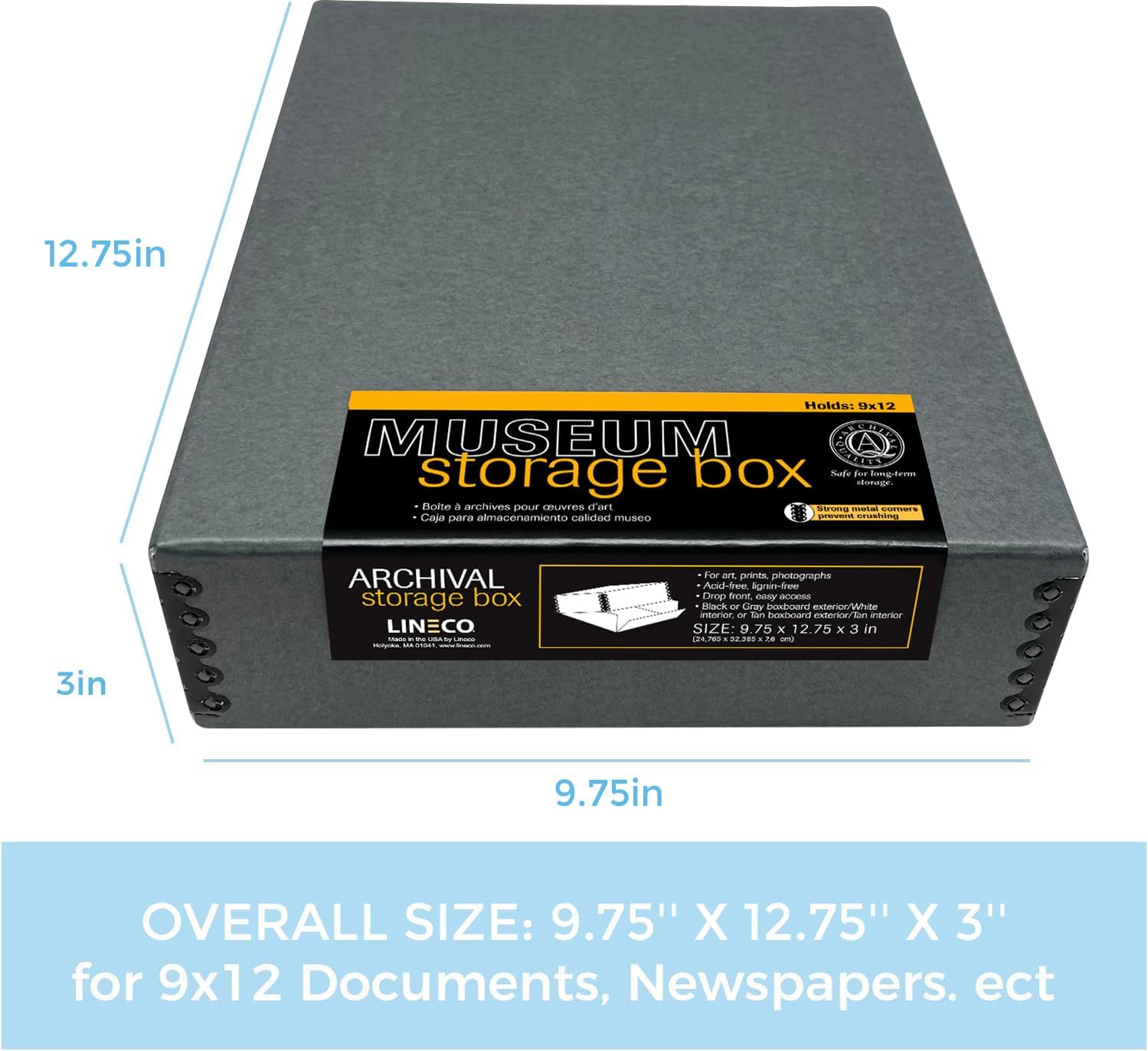
That box of prints, slides, or original artwork you’re protecting isn’t just paper and dye — it’s irreplaceable. The good news is that the archival storage box market is mature enough that a well-made product genuinely delivers. The term archival gets thrown around loosely, so let’s define it immediately: a truly archival box is acid-free (pH 7.0 or above, meaning it won’t off-gas the acids that yellow and brittlize paper over decades), lignin-free (lignin is a wood-pulp compound that oxidizes and discolors over time), and often buffered with an alkaline reserve — a built-in chemical buffer that neutralizes incoming acidity from the environment. Lineco has been one of the most consistently recommended brands in the preservation community for decades, and their box lineup covers three main formats: drop-front, clamshell, and folio. Each format is a genuinely different tool. Choosing the wrong one won’t ruin your collection, but it will create friction you’ll feel every time you access the materials — and friction leads to bad habits.
This guide is written for restorers who are past the “what’s archival mean?” stage and into the “which specific format do I actually buy?” decision. We’ll break down the functional tradeoffs, draw on what long-term owners and the preservation literature consistently say, and end with clear decision rules.
| EDITOR'S PICKLineco Archival 16" x 20" Print… | Mid-tierLineco Museum Archival Storage… | Budget pickLineco Folio Storage Box. Archi… | |
|---|---|---|---|
| Dimensions (WxLxH) | 16.5x20.5x3 in | 9.75x12.75x3 in | 11x14x1.75 in |
| Design | Drop Front | Drop Front | Clamshell |
| Acid-Free | — | ✓ | — |
| Metal Edge | — | ✓ | ✓ |
| Exterior Color | Blue/Gray | Gray | — |
| Price | $38.99 | $25.99 | $22.50 |
| See on Amazon → | See on Amazon → | See on Amazon → |
What “Acid-Free” and “Buffered” Actually Mean Over 20+ Years
Before the formats, a brief word on chemistry — because it directly changes how you evaluate Lineco’s specs.
The Library of Congress Preservation Directorate’s guidance on paper and photograph care identifies off-gassing acids as one of the primary environmental threats to stored materials. When cardboard boxes contain residual lignin or are manufactured with acidic binders, they slowly release volatile compounds that migrate into your prints, negatives, and paper artwork. Over five years this is barely perceptible; over twenty years it’s the difference between a vibrant Kodachrome print and a yellowed, brittle one.
Lineco’s metal-edge boxes (their signature construction) use pH-neutral gray board with an alkaline buffer — typically calcium carbonate — rated to resist acidic ingress over long storage periods. The Society of American Archivists’ preservation glossary defines alkaline reserve as a pH buffer of at least 2% calcium carbonate by weight, providing ongoing neutralization as ambient acids try to penetrate.
One signal from the user community worth noting: reviewers who have used Lineco boxes for over 20 continuous years for paper artwork storage report no degradation in the box itself and no adverse effects on stored materials — a rare real-world durability signal in a category where most buyers never think to report back two decades later.
One caveat about that box with black dust inside: Several buyers who received new Lineco boxes found a fine black residue or ash-like dust inside. At least one documented pH-testing the material before concluding it was a manufacturing artifact — almost certainly carbon dust from the cutting process on the gray board, not a contamination risk. The level of scrutiny that led to pH-testing before raising an alarm is itself a useful signal about who buys these products. If you find similar residue, a quick wipe with a lint-free cloth and an optional pH-strip test on the material will confirm it’s inert.
Drop-Front vs. Clamshell: The Decision That Actually Matters Most
This is the core format decision for most restorers, and the split is functionally clear once you understand the access pattern each format optimizes for.
Drop-front boxes (sometimes called Clamshell Half-Drop or simply “drop-front” in Lineco’s catalog) have a front panel that folds down flat, exposing the full interior from the front. You reach in horizontally. This is optimal for materials you lay flat and retrieve by lifting — prints stored in stacks, unframed artwork, or mounted photographs. The design excels when you’re doing periodic bulk access: pulling a whole tier of prints to review or insert interleaving tissue.
Clamshell boxes (two-piece lid-and-tray construction) open like a book or a hinged box — the lid lifts completely off or swings back on a connected spine. The full opening exposes the contents from above and provides clean vertical access. For frequently accessed materials — slides in archival sleeves, negatives in binder pages, or documents you’re actively cross-referencing — the clamshell format wins on ergonomics. Owners who switch from drop-front to clamshell for high-access collections consistently cite this as the deciding factor: you’re not tilting your wrist into an opening; you’re lifting a lid.
The lid-removal friction note: A recurring minor complaint from clamshell owners is that when the box is only lightly loaded, the friction fit between lid and tray can make lid removal slightly stiff. This is by design — a snug fit protects against dust infiltration — but it’s worth knowing if you’re storing a collection that will grow into the box over time rather than filling it immediately.
Decision rule, direct:
- If you access the box fewer than 4 times per year (archival cold storage, long-term holds), drop-front is fine and often better on shelf depth.
- If you access the box more than monthly, or if the materials are being actively worked with during a restoration project, buy the clamshell.
Folio Boxes and Photo Card Boxes: The Specialized Cases
Folio boxes are flat, oversized enclosures designed for large unbound documents, prints, or artwork that cannot be stored vertically without risking curl or crease. The Image Permanence Institute at Rochester Institute of Technology notes that horizontal flat storage is the preferred orientation for photographic prints larger than 11×14 inches, as vertical storage introduces edge stress that compounds over time. Lineco’s folio format serves this need — typically available in sizes up to and including large-format print dimensions.
If you’re managing a collection that includes oversized documents, architectural drawings, or large-format camera negatives, the folio is not optional; it’s the correct tool for the material’s physical requirements.
Photo card boxes (sometimes called print storage boxes or photo boxes in Lineco’s naming) are the format that consistently earns praise for space efficiency. Owners report consolidating 8–10 traditional photo albums into a single well-organized archival photo box — a significant footprint reduction for family history collections. The NEDCC Preservation Leaflet 4.1 on storage enclosures for photographic materials recommends that prints be stored flat in enclosures sized to minimize movement, which is exactly what a properly fitted photo card box achieves.
Sizing Your Box: 4×6, 8×10, and Oversized Documents
Getting the size wrong is the most common purchasing mistake, and it cuts both ways. Oversized boxes allow prints to shift and curl at the edges; undersized boxes force you to bend material to fit.
By the Numbers: Common Lineco Box Interior Dimensions vs. Print Sizes
| Print/Document Size | Recommended Interior Box Dimension | Notes |
|---|---|---|
| 4×6 prints | ~4.25″ × 6.25″ interior | Small clearance prevents lateral shift |
| 8×10 prints | ~8.25″ × 10.25″ interior | Standard print box sizing |
| 11×14 prints | ~11.25″ × 14.25″ interior | Verify depth for your stack height |
| Oversized / folio | 14″+ on long dimension | Folio format; horizontal storage required |
Lineco lists interior dimensions on their products — always match to interior, not exterior. For prints stored with interleaving tissue (recommended by the Library of Congress for photographs that may have residual surface instability), add approximately 20% to your depth estimate when calculating how many prints will fit per box.
Shelf and Cabinet Fit: A Practical Reality Check
One practical question that comes up repeatedly from buyers: will these boxes fit on a standard bookshelf or inside a filing cabinet?
Standard bookshelf depth is typically 10–12 inches. Lineco’s photo boxes and smaller clamshell formats are generally designed to fit within this envelope, but folio boxes — by definition sized for large-format materials — will overhang a standard shelf. For folio storage, flat-file cabinets (dedicated archival flat files) are the proper housing, or purpose-built open shelving with a deeper footprint.
Filing cabinets are a poor match for archival boxes in general: the lateral pressure from file hangers and the steel environment (which can off-gas, particularly in older painted cabinets) is sub-optimal. Per the Society of American Archivists’ glossary guidance on storage environments, baked-enamel steel shelving in open configurations is preferred over enclosed steel cabinets for long-term archival storage.
Should These Boxes Replace a Fireproof Safe?
This question comes up because restorers protecting irreplaceable materials naturally want redundant protection. The honest answer is that archival boxes and fireproof protection solve different threats and are not substitutes for each other.
Lineco archival boxes protect against:
- Acid migration and off-gassing from adjacent materials
- Light exposure (when boxes are closed and shelved)
- Physical abrasion and dust
- Humidity buffering (to a limited degree, not climate control)
Fireproof safes protect against:
- Heat and fire
- Water intrusion (in rated models)
The Image Permanence Institute’s storage environment guidance is clear that chemical stability (pH control, off-gassing prevention) and physical security (fire, flood) are separate variables requiring separate solutions. Storing archival boxes inside a fireproof safe rated for paper (typically UL Class 350, meaning interior temperatures stay below 350°F during a fire) is the belt-and-suspenders approach used by serious private archivists and small institutional collections alike. The archival box handles chemistry; the safe handles disaster.
Frequently Asked Questions
What is the difference between a drop-front and a clamshell archival box and when should I use each? A drop-front box has a front panel that folds down, giving you horizontal reach-in access — best for flat print stacks you access infrequently. A clamshell box has a lid that lifts completely away, giving you full top-down access — best for materials you retrieve frequently, like negatives in sleeves or documents under active review. If you’re unsure, the clamshell is the more versatile default.
Are Lineco boxes truly acid-free and what does that mean for my photos over 20+ years? Lineco’s metal-edge boxes use pH-neutral board with an alkaline calcium carbonate buffer. Acid-free means no residual acids in the board itself; the alkaline buffer goes further by actively neutralizing acids that migrate in from the environment. Owners who have used Lineco boxes for 20+ years without observable material degradation provide a credible long-term validation that the chemistry holds up in real storage conditions.
What caused the black dust or residue some reviewers found inside their new box? Almost certainly carbon dust from the cutting and manufacturing process on the gray board. At least one buyer pH-tested the residue before concluding it was inert. A wipe with a lint-free cloth is the standard remediation. If you want certainty, pH test strips are inexpensive and widely available from archival suppliers.
Can these boxes fit inside a standard bookshelf or filing cabinet? Smaller photo boxes and clamshell formats are generally designed for standard 10–12 inch deep bookshelves. Folio boxes are not — they require deeper shelving or dedicated flat-file storage. Filing cabinets are not recommended for archival box storage due to enclosed steel environments and poor ventilation.
How do I choose the right box size for my collection of 4×6 prints, 8×10 prints, or oversized documents? Always match the box’s interior dimensions to your print size with approximately 0.25 inches of clearance on each dimension. If using interleaving tissue, add 20% to depth estimates. Oversized materials (11×14 and above) should be stored horizontally in folio-format boxes per Image Permanence Institute guidance.
Should I use these boxes in combination with a fireproof safe or are they sufficient on their own? For irreplaceable materials, combine both. Archival boxes control chemical threats; a UL Class 350-rated fireproof safe controls fire and flood threats. They address different failure modes and neither substitutes for the other. The archival box goes inside the safe, not instead of it.
The Decision Frame
If your access frequency is low and space is tight: drop-front photo box, sized to your predominant print size.
If you’re actively working with materials during a restoration project or pulling files monthly: clamshell, full stop — the ergonomic difference is real and reviewers consistently report it as the reason they switched.
If you have large-format prints, oversized documents, or architectural drawings: folio format with dedicated flat-file or deep-shelf housing.
For any collection you consider irreplaceable: pair your Lineco boxes with a UL Class 350 fireproof safe. The boxes do the chemistry; the safe covers the catastrophe.