August 17, 2026 • Doug Porter • 10 min reading time • Prices verified June 25, 2026
The 4x6 Photo Album Problem: Volume, Durability, and What 'Holds 600 Photos' Actually Means
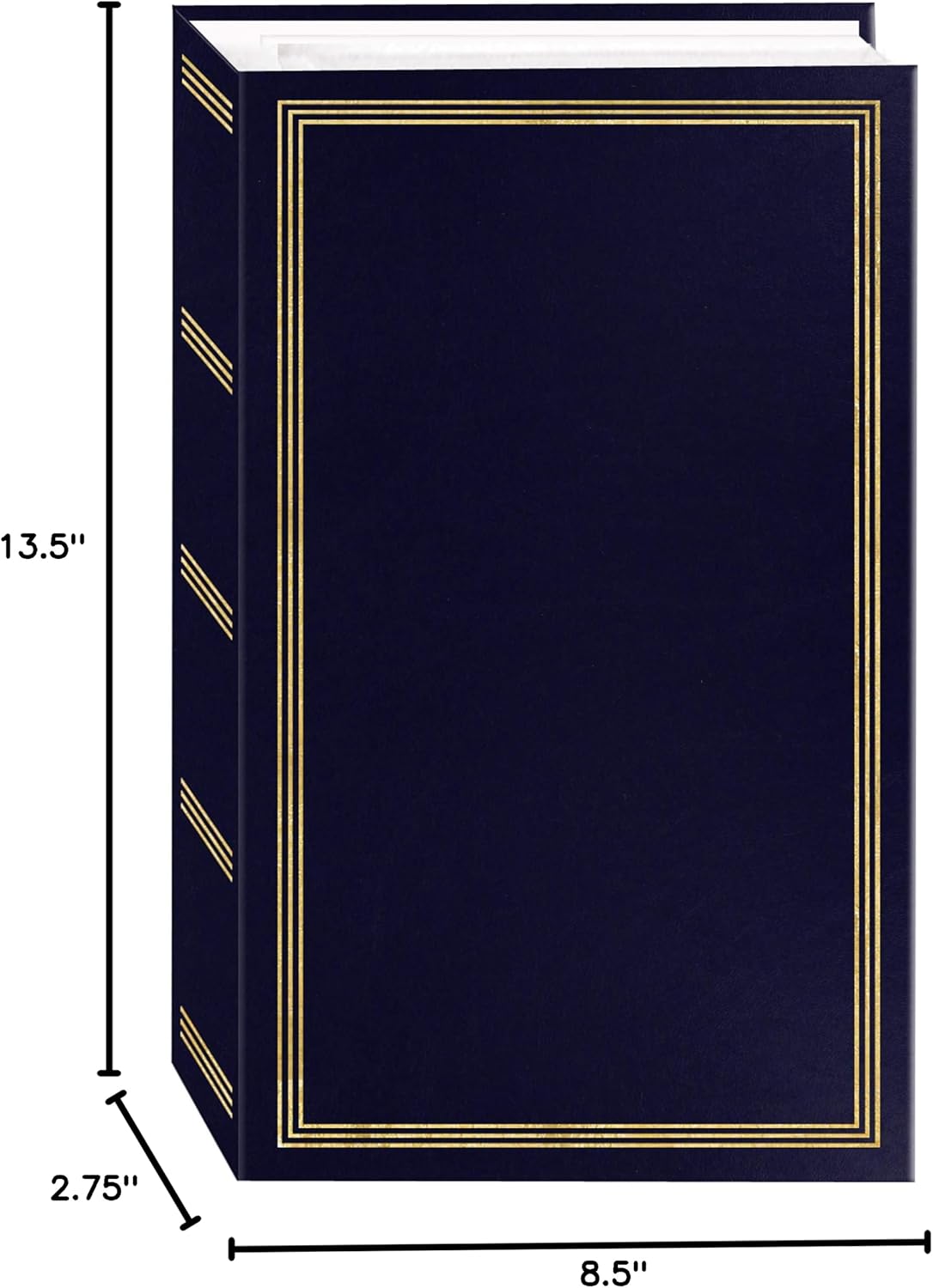
That box of restored prints sitting on your desk right now — the ones you spent hours scanning, color-correcting, and printing — deserves better than a grocery-store album that yellows within a decade. But picking the right 4x6 photo album (a standard sleeve-style album sized to hold prints that measure four inches by six inches, the most common home-printer output) turns out to be genuinely complicated once you push past the marketing headline. “Holds 600 photos” sounds definitive. It isn’t. Sleeve count, pocket depth, paper thickness tolerance, cover material longevity, and actual loaded weight all vary enormously between albums that look identical on a product page. This guide untangles those variables — with the decision math you need if you’re buying in volume, gifting finished restoration work, or building an archival-quality presentation for a client.
| EDITOR'S PICKZoview Self-Adhesive Photo Album | Mid-tierPioneer Sewn Bonded Leather Boo… | Budget pickPioneer Photo Albums STC-504 Na… | |
|---|---|---|---|
| Capacity | Holds 8x10 | 300 4x6 | 504 Pockets |
| Mounting | Self-adhesive | Sewn pages | Pockets |
| Dust-free | ✓ | — | — |
| Waterproof | ✓ | — | — |
| Cover Material | Leather | Bonded leather | — |
| Binding | — | BookBound | — |
| Price | $26.99 | $19.99 | $11.99 |
| See on Amazon → | See on Amazon → | See on Amazon → |
What ‘600 Pockets’ Actually Means — and Where the Number Lies
The pocket count on an album listing is the one figure that almost always checks out. A 600-pocket album genuinely contains 600 sleeves. The deception is subtler: sleeve depth and pocket opening size are not standardized, and they determine whether your actual prints will fit without buckling.
Standard 4x6 pocket dimensions in most albums are nominally 4.25 × 6.25 inches — a quarter-inch of tolerance on each side. That sounds generous until you’re feeding in prints from a home inkjet printer. Inkjet photo paper (especially heavyweight glossy stock at 270gsm or heavier) is measurably thicker than drugstore machine prints, and reviewers of the Potricher linen 600-pocket album consistently note that premium-stock prints require a firm push to seat fully. The print goes in, but repeat insertions and removals risk corner curling at the pocket lip.
The real surprise is weight. The Potricher linen album is widely praised — owners across aggregated reviews describe it as the best-feeling album in its price bracket — but the product listing does not mention that a fully loaded copy is heavy enough to be uncomfortable to hold in one hand. The math is straightforward:
By the numbers 600 prints × ~7g each (standard 4×6 on 200gsm stock) = ~4.2 kg of paper alone Add album body (hardcover linen): ~700g empty Fully loaded estimated total: 4.8–5.2 kg (~10.5–11.5 lbs)
That is a meaningful ergonomic fact for a gift recipient who is elderly, or for an album you expect to pull off a shelf and browse casually. The Image Permanence Institute at Rochester Institute of Technology notes in its guidance on storage enclosures that physical access habits — how often and how vigorously a storage object is handled — are a leading cause of physical degradation in photographic collections. A 10-pound album that never gets opened because it’s unwieldy is an archival failure, whatever its material quality.
Cover Material: Bonded Leather vs. Linen Hardcover — the Honest Comparison
This is where marketing language works hardest against the buyer. “Bonded leather” sounds premium. In practice, bonded leather is a composite: leather scraps and fibers bonded with polyurethane to a backing. The American Institute for Conservation’s guidance on photographic collection care does not recommend bonded leather for long-term archival housing, and for good reason — polyurethane binders are vulnerable to humidity cycling, and bonded leather covers are known to peel and flake within five to ten years under normal household conditions. The Pioneer STC-504, which uses a bonded leather cover, draws steady praise for its initial look and build feel, but reviewers with multi-year ownership report corner wear and surface delamination on older copies. That’s not a defect — it’s the material doing what bonded leather does over time.
Linen hardcover (woven fabric over a rigid board) behaves differently. Linen does not delaminate. It is breathable, which matters because the Library of Congress Preservation Directorate explicitly recommends housing photographic materials in environments with stable, moderate relative humidity — and a breathable cover contributes marginally but genuinely to that microclimate. Linen shows scuffs and stains more readily than the smooth surface of bonded leather, but it holds its structure for decades. For a gift album meant to outlast the giver, linen is the honest recommendation.
The practical tradeoff in one sentence: bonded leather looks more “finished” on arrival and photographs better as a gift; linen holds its integrity longer and is the right call for anything you’re building to last.
Shipping Damage: The Problem Nobody Puts in the Listing
Both the Pioneer STC-504 (bonded leather) and the Potricher linen album accumulate shipping damage complaints that follow an almost identical pattern: smashed or dented corners on arrival, caused by inadequate inner packaging. Albums are rigid, heavy, and corner-vulnerable — the exact profile that standard poly mailers and even thin cardboard boxes handle poorly.
This matters disproportionately for gift buyers, who represent a large share of the market for both albums. Reviewers who note they purchased for a hunting trip memory book or a childhood milestone collection for an adult child describe opening a box expecting to wrap a gift and instead dealing with a damaged corner they have to either explain away or return.
If you’re ordering either of these albums as a gift, the FAQ section below covers protective ordering strategies in detail. The short version: always order with enough lead time to allow a replacement shipment, and request gift packaging only after confirming the unit is undamaged — not before.
Self-Adhesive Albums: Zoview and the Aesthetic Loyalty Loop
The Zoview self-adhesive album operates on a completely different structural logic. Instead of pre-formed plastic sleeves (pockets), self-adhesive albums use pages coated with a removable adhesive — you peel back a protective film, position your prints, and press them down. The page is then covered by a clear acetate overlay.
Owners describe buying three or four Zoview albums at a time specifically to line on bookshelves because they “look like large books” — a visual consistency that sleeve albums, with their pocket-grid texture, can’t replicate. That loyalty loop is real and worth taking seriously: if the album is going to live on a shelf in a living room or studio and be handled by visitors, presentation matters.
The functional tradeoffs are equally real:
- Repositionability: Fresh adhesive pages allow repositioning within a short window. Once the adhesive fully cures (typically 24–48 hours, though manufacturer guidance varies), removal risks print damage — the adhesive is nominally removable but behaves differently on matte vs. glossy paper stocks.
- Mixed-media capability: Self-adhesive pages accommodate ephemera — ticket stubs, handwritten notes, small prints of irregular size — that sleeve albums physically cannot hold. For a restoration project that mixes prints with archival documents, self-adhesive wins by default.
- Long-term chemical stability: Wirecutter (New York Times) guidance on photo albums consistently flags that adhesive chemistry matters for archival permanence. Look for albums labeled “acid-free” and “lignin-free” on both the page stock and adhesive layer. Zoview’s product listings carry acid-free claims; independent chemical testing of specific lots is not something this analysis can verify, and buyers who care about 25+ year archival permanence should note that claim-verification for adhesive products is an ongoing gap in the consumer market.
Decision Framework: If X, Then Y
You’re at the point of purchase. Here’s the explicit decision map:
If you’re gifting a completed restoration project (hunting trip album, milestone book for an adult child, grandchild collection) and the recipient will display it on a shelf: → Zoview self-adhesive for living-room aesthetics, or Potricher linen if you want the feel of a traditional album. Order 10–14 days early to absorb a potential re-ship. Do not order bonded leather for a keepsake gift you expect to last decades.
If you’re building a personal archive of restored 4x6 prints to actually use and browse: → Potricher linen 600-pocket is the most praised option for pure volume and longevity, but plan for the weight. Consider splitting into two 300-print albums by decade or subject if the recipient is elderly or the collection will be frequently browsed.
If you’re mixing restored prints with handwritten captions, ephemera, or irregularly sized prints: → Self-adhesive format is the only practical choice. The Zoview album is the consistent pick here.
If you’re buying for a client deliverable or boutique studio presentation: → Neither pocket sleeve nor consumer self-adhesive is the right answer. Look at professional flush-mount or lay-flat album options — a separate category with different pricing and vendors entirely.
If budget is the primary constraint and you’re storing rather than displaying: → The Pioneer STC-504 remains functional for pure storage, with the explicit understanding that the bonded leather cover will show age within five to ten years. It is not a long-term display piece.
Frequently Asked Questions
Will 4x6 prints from a home photo printer fit properly in standard pocket album sleeves? Usually yes, but with a caveat. Most pocket albums are sized for machine prints on standard photo paper. Heavyweight inkjet stock (270gsm and above) is noticeably thicker and may require firm seating in the sleeve. If you’re printing on premium stock, test one pocket before loading 600 prints — you’ll know immediately whether the sleeve opening is compatible.
What’s the best album style for mixing restored prints with handwritten captions or ephemera? Self-adhesive format is the only style that practically accommodates mixed media. Sleeve albums are fixed-geometry — a 4×6 pocket holds a 4×6 print and nothing else. Self-adhesive pages let you place a print alongside a folded note, a small document scan, or even a handwritten caption card on the same page.
How do I protect album corners when ordering online for a gift? Order early enough to allow one replacement shipment. When the package arrives, inspect before wrapping — corner damage on rigid albums is not always visible through the outer box. If you’re ordering multiple albums (common for batch gifting), note which specific units are undamaged before assigning them to recipients.
Is there a meaningful difference between bonded leather and linen hardcover in terms of long-term durability? Yes, and it’s not minor. Bonded leather is a polyurethane composite that delaminates over years, especially in humid environments or with regular handling. Linen hardcover (woven fabric over board) does not delaminate and holds its structure for decades. For a gift or archive meant to last a generation, linen is the honest choice. Bonded leather is appropriate for shorter-horizon use or when initial appearance is the priority.
How heavy does a fully loaded 600-pocket album actually get? Approximately 10 to 11.5 pounds with standard 4×6 photo prints. This is consistently absent from product listings and consistently noted in long-form owner reviews. If the recipient has limited hand strength or the album will be pulled from a shelf frequently, consider a smaller-capacity album or splitting the collection across two volumes.
Can self-adhesive pages be rearranged, or are the photos permanently mounted? Self-adhesive pages allow repositioning in the short window after initial placement — typically a few hours to a day. After full adhesive cure, removal is possible but risks surface damage, particularly on matte-finish prints. Treat self-adhesive layouts as semi-permanent once set: plan your arrangement before committing. For a project where sequence will evolve over time (adding new prints, reordering by date), a sleeve-pocket album is more forgiving.